
Smart Cities Need Smart Sanitation: How Robotics Can Revolutionize Urban Cleanliness
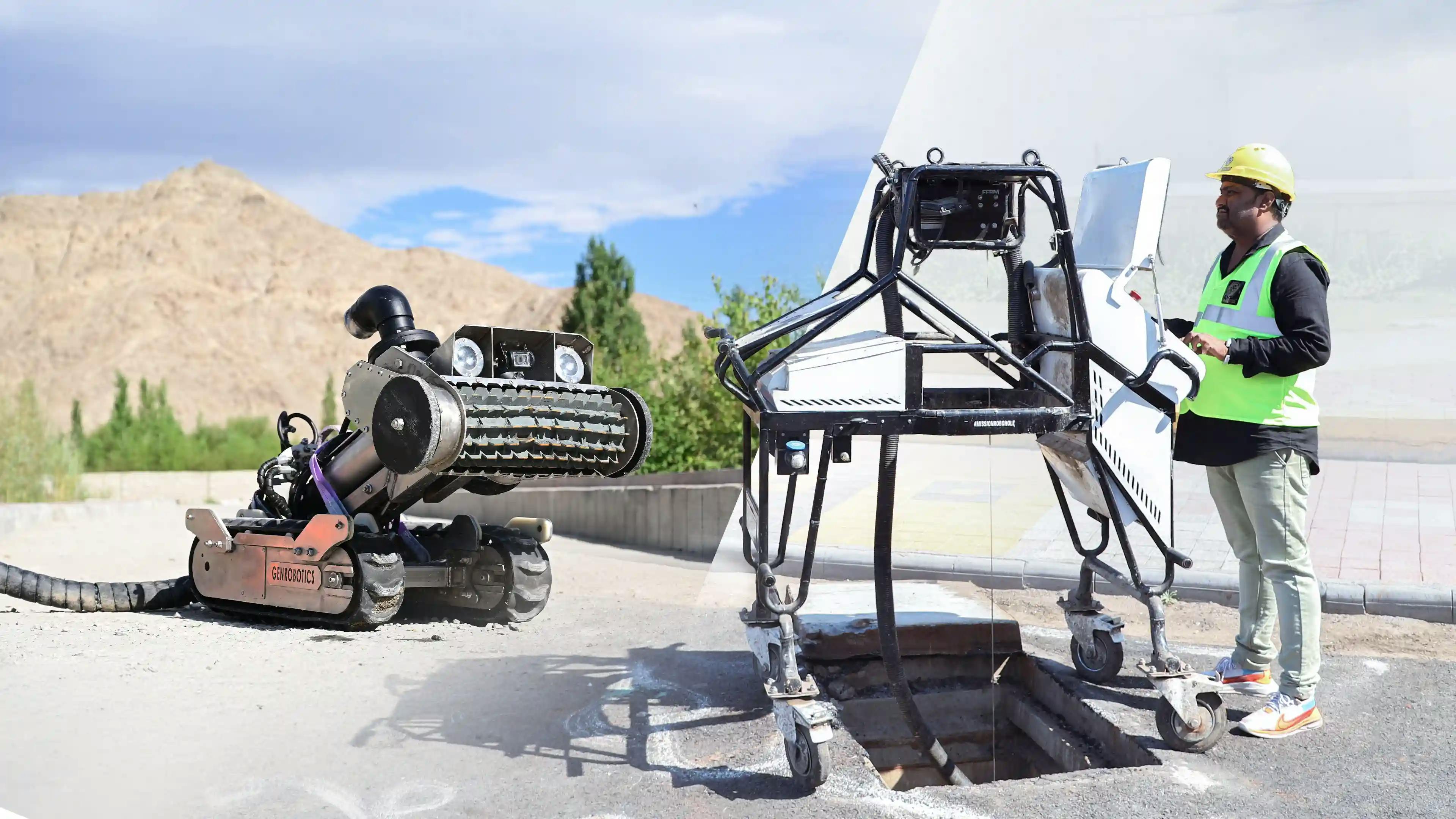
India’s rapid urbanization is creating cities that are increasingly complex and densely populated. While skyscrapers and highways rise, basic urban infrastructure, particularly sanitation, is struggling to keep pace.
Introduction
India’s rapid urbanization is creating cities that are increasingly complex and densely populated. While skyscrapers and highways rise, basic urban infrastructure, particularly sanitation, is struggling to keep pace. Overflowing drains, blocked sewer lines, irregular garbage collection, and aging waste infrastructure have become routine challenges for municipal bodies. These inefficiencies not only compromise public health but also place enormous physical and psychological strain on sanitation workers.
The solution lies in smart sanitation a fusion of robotics, AI, and IoT technology capable of modernizing urban waste and sewer management. By deploying solutions like Genrobotics’ Bandicoot Robot, Bandicoot Mobility+, and the Wilboar robotic manhole desilting system, cities can move away from hazardous, labor-intensive practices toward automated, reliable, and sustainable operations. These systems not only enhance service delivery but also protect human life, improve hygiene, and promote environmental sustainability.
Why Smart Sanitation Matters
1. Protecting Workers and Eliminating Manual Scavenging
Manual scavenging and sewer maintenance are among the most dangerous municipal jobs in India. Workers entering narrow, toxic sewer lines face suffocation, exposure to deadly gases, and long-term health issues.
Robotic solutions like Bandicoot Robot and Wilboar have revolutionized sewer cleaning. These machines can navigate confined spaces, clean drains, suction sludge, and desilt manholes without any human entry, dramatically improving worker safety and eliminating the risk of accidents. Additionally, platforms like Bandicoot Mobility+ enable high-mobility operations in congested lanes, expanding the reach of robotic cleaning to areas inaccessible to traditional equipment.
By integrating robotics, municipalities not only protect lives but also comply with legal mandates to end manual scavenging — transforming sanitation work into skilled, dignified employment.
2. Enhancing Public Health and Hygiene
Improperly managed waste leads to contamination, waterborne diseases, and vector proliferation. Overflowing garbage bins, clogged drains, and untreated sewage can quickly escalate into public health crises, especially during monsoon seasons.
Smart sanitation systems, powered by robotics and IoT-enabled monitoring, ensure that drains and sewers are cleared regularly, waste collection is timely, and streets remain cleaner. Real-time sensors and AI-driven analytics allow municipalities to preemptively address sanitation risks, reducing disease outbreaks and enhancing overall urban hygiene.
3. Improving Operational Efficiency and Reliability
Robotics and smart sensors enable data-driven waste management. IoT-enabled bins detect fill levels in real-time, while AI optimizes collection routes, reducing unnecessary trips, lowering fuel consumption, and preventing overflow.
Robotic systems like the Bandicoot Robot and Wilboar can clean multiple manholes per day, handle deeper pipelines, and work in narrow, congested areas — capabilities beyond human reach. The combination of automation, robotics, and predictive analytics ensures more reliable and scalable sanitation operations, critical for rapidly growing urban centers.
4. Environmental Sustainability
Smart sanitation systems help municipalities adopt sustainable waste practices. Automated waste sorting, efficient collection, and robotic sewer cleaning reduce landfill dependency, minimize greenhouse gas emissions, and support the circular economy.
AI-assisted sorting robots can segregate recyclables from waste streams, while IoT-enabled systems reduce redundant collection trips. Robotics also prevents sewage overflow into natural water bodies, preserving ecosystems and protecting urban environments.
Technologies Transforming Urban Sanitation
Robotic Sewer Cleaning
- Bandicoot Robot: Cleans manholes and pipelines safely without human entry.
- Bandicoot Mobility+: Provides high-mobility capabilities for narrow or congested urban areas.
- Wilboar: Desilts manholes, chambers, and pipelines, ensuring deep-cleaning efficiency.
These robots allow municipalities to maintain sewer lines faster, safer, and more thoroughly than traditional methods.
IoT-Enabled Smart Bins and Waste Collection
Smart bins with sensors detect fill levels and trigger collection alerts, while GPS-enabled trucks optimize routes in real time. This reduces overflow, fuel usage, and operational costs while improving responsiveness.
AI-Powered Sorting and Recycling Robotics
Advanced robotics at Material Recovery Facilities (MRFs) automates segregation of paper, plastics, metals, and organic waste. This boosts recycling rates and minimizes landfill use, creating more sustainable waste-management practices.
Implementation Blueprint for Municipalities
- Audit Infrastructure: Map out sewers, drains, and waste hotspots; identify high-risk zones for robotic intervention.
- Pilot Programs: Deploy Bandicoot, Bandicoot Mobility+, and Wilboar in selected wards to validate performance.
- Training and Upskilling: Retrain sanitation workers to operate and maintain robotic systems.
- Scale Across City: Expand robotics and smart bins citywide based on pilot results.
- Monitor and Optimize: Track KPIs like collection efficiency, reduction in human sewer entry, and public complaint resolution to refine operations.
Benefits for Municipalities
- Protects sanitation workers and eliminates human exposure to hazards.
- Improves operational efficiency and reduces costs.
- Enhances public hygiene and reduces disease risks.
- Promotes environmental sustainability and circular economy practices.
- Supports compliance with national policies ending manual scavenging.
Conclusion
The era of smart cities requires smart sanitation. Robotics solutions like Genrobotics’ Bandicoot, Bandicoot Mobility+, and Wilboar empower municipalities to modernize waste and sewer operations, protect workers, improve hygiene, and advance sustainability goals.
Municipal leaders who adopt these technologies today will create safer, cleaner, and future-ready cities for generations to come. Smart cities cannot exist without smart sanitation — and robotics is the key.